

Straightener Machine
What is Straightener Machine
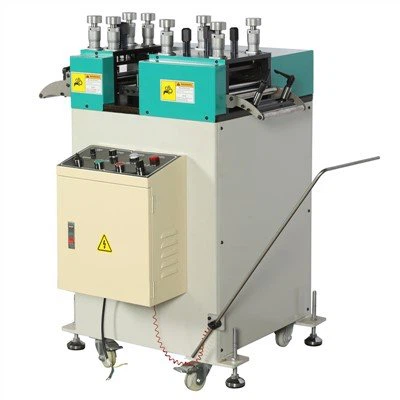
Straightener machine is a kind of machine and equipment used in the processing of metal materials, its main role is to straighten and stretch metal materials to improve the physical properties of the material and improve the productivity of the purpose. Straightener machine is widely used in iron and steel, aviation, construction, shipping, automotive, medical and other fields, is one of the indispensable equipment in these industries.
Benefits of Straightener Machine
Improve the physical properties of materials
Because different metal materials have their own unique physical properties, sometimes in the manufacturing process will inevitably stretch unevenly and other issues, the use of straightener machine can force the metal materials to stretch and straighten, not only to improve the physical properties of metal materials, but also to improve its ability to withstand pressure.
Improve production efficiency
The use of straightener machine can greatly improve production efficiency, because it can quickly and accurately straighten and stretch the metal material, effectively reducing the manual intervention and time waste, but also can reduce the product in the production process of scrap and defective products.
Enhanced precision and accuracy
An straightener machine utilizes advanced technologies and precise control systems to ensure accurate straightening of materials. These machines can straighten various types of materials with high precision, achieving consistent results every time. By eliminating human error and providing precise adjustments, an straightener machine guarantees the desired outcomes, meeting strict quality control standards.
Reduction in material waste
Straightener processes often result in material waste due to errors or imprecise adjustments. Straightener machines minimize material waste by ensuring accurate straightening and reducing the need for rework. This not only saves valuable resources but also reduces costs associated with material replacement, contributing to a more sustainable and cost-effective manufacturing process.


Why Choose Us
Experience
It has served more than 1,000 customers in more than 160 industries, and has practical experience in the research and development, design, production, manufacturing, sales, after-sales and other overall solutions of stamping automation equipment.
Production
The production workshop has advanced production and processing equipment such as CNC high-speed lathes, CNC machining centers, wire cutting, internal and external cylindrical grinders, lathes, milling machines, and boring machines; the R&D department introduces technologies from Japan and Taiwan.
Production equipment
Japan Okuma, Taiwan WELE, Italy Pama, imported grinder, CNC, wire cutting machine, drilling machine
Our team
With the joint efforts of the R&D team with more than 10 years of experience, continuous innovation has accumulated strong technical force.
How Does a Straightener Machine Work?
The straightener machine mainly uses the rotation of the straightening wheel to force the metal material to be stretched and straightened. Roll the metal material into the straightening wheel, start the normal work of the straightener machine. Through the rotation of the straightening wheel, the metal material is gradually straightened and stretched. When the metal material reaches the predetermined straightening size, the winding device starts to roll up the metal material and store it.

What Materials can be Straightened by a Straightener Machine?
These straightener machine are used to straighten various metal items such as wires, bars, sheets, beams, angles, plates, pipes, rods, round bars, wire rods, metal studs, strips, tubes, etc., made from diverse metals like steel, iron, aluminum, copper, and other metals.
How to Reduce the Thermal Deformation of Straightener Machine?
In the process of processing and production of the straightener machine, the chips are a heat source that cannot be ignored at all. The main reason is that if a large amount of hot cutting is not removed from the equipment in time, it will directly lead to thermal deformation of the main components of the machine tool. For heat sources that are difficult to separate on the straightener machine, such as built-in motors, screw nut pairs, bearings or other moving pairs, direct cooling can be used to dissipate heat and effectively reduce their temperature, thereby reducing their thermal deformation.

What is the Width and Thickness of The Material That the Straightener Machine can Straighten?
The straightening machine can straighten materials with a thickness of 0.5-6.0mm and a width of 0-1600m. It is suitable for straightening thick plates and high-strength plates. The thick plate straightening machine has a wide range of applications and can process thick plates and high-strength plates that cannot be processed by ordinary stamping production lines. It is mainly used for straightening thick plates before stamping, such as automotive hardware accessories, fasteners, and caster hardware accessories.

Straightener machine usually consists of processing body, feeding equipment, straightening wheel and winding device and other parts. Its main function is to correct and stretch metal materials to improve the physical properties of the materials and increase productivity.
How to Choose The Right Straightener Machine
Evaluate straightening capacity
Determine the required straightening capacity based on the maximum thickness and width of the materials you will process. Consider the number of straightening rolls needed for effective material flattening.
01
Consider material specifications
Evaluate the material properties of the coils, such as yield strength, hardness, and surface conditions. Ensure that the straightener machine is capable of handling the specific material characteristics.
02
Assess precision and accuracy
Look for a straightener machine that offers precise adjustment capabilities to achieve the desired flatness and straightness of the material. Consider digital readouts, automatic adjustment systems, and fine-tuning options.
03
Evaluate speed and feed rates
Determine the required feed rate of your stamping line and select a straightener machine that can handle the desired speed. Consider variable speed drives and adjustable roller pressure to accommodate different material processing speeds.
04
Safety features
Look for safety features such as emergency stops, overload protection, and safety guards to ensure operator safety during operation.
05
Bar and tube straightener machines
Utilize a series of rollers positioned in specific angles to gradually straighten bars or tubes. These machines can be designed for both round and shaped materials and are effective for materials of various diameters.
Sheet metal straightener machines
Aimed at flattening sheet metals, these machines feature rollers arranged in two planes. They are essential in industries where sheet metal is used for manufacturing parts, ensuring material flatness and uniformity.
Rotary straightening machines
Rotary straighteners are predominantly used for precision straightening of round bars and tubes. They work by bending the material around sets of rollers arranged in a helical pattern, correcting imperfections through rotation and controlled pressure. This method is particularly suited for high-speed straightening of long products.
Press straightening machines
These machines use hydraulic or mechanical presses to apply direct pressure at specific points along the material to correct bends and distortions. Press straightening is often used for components with irregular shapes or for materials that require precise localized straightening, such as large metal plates or complex profiles.
Two-roll straighteners
Two-roll straighteners, also known as "duo" straighteners, employ two opposed rolls to flex the material back and forth, removing curvature through a series of incremental adjustments. This type is particularly effective for thick bars and heavy sections, offering good control over the straightening process.
Multi-roll straighteners
These machines use multiple rolls, often in a staggered configuration, to straighten materials. The multi-roll approach is effective for both flat and shaped products, providing high precision and the ability to adjust for various degrees of straightness requirements.
Stretch straightening machines
Stretch straighteners apply tension to the material until it yields slightly, removing bends and twists. This method is especially useful for materials that are prone to warping during heat treatment or machining. Stretch straightening is commonly used for aerospace components and precision manufacturing where the highest degree of straightness is required.
Heat straightening machines
Heat straightening involves applying localized heat to a deformed area of metal, followed by controlled cooling. This process can correct distortions without significantly altering the material's properties. It's commonly used for structural steel components that have warped due to welding or other heat-intensive processes.
What is the Working Speed and Voltage of the Straightener Machine?
The speed of straightener machine depends on the capabilities of the machine type and the material properties of the workpiece. This determines the accuracy of the straightened metal parts as well as the amount of material that will be run in a certain period. Averagely, most quality straighteners can attain a working speed ranging from 70 m/min to 150 m/min.
Most industrial straightening machines require a voltage of around 200 volts to function well. This ensures fine processing of metal parts with low failure rates. Generally, the maximum thickness and width of workpieces are important in determining the voltage requirement for metal straightening machines. Materials with high yield strengths require greater voltage to achieve the desired level of straightness.
Application of Straightener Machine
Straightening machines are widely used in the metal processing industry. Pipes and wires often have defects such as deformation and bending during processing. If they are not repaired, subsequent processing cannot be carried out. Straightening machines can accurately correct these materials to meet the requirements of subsequent processing for material accuracy and stability.
In the construction industry, steel is widely used, and various types of buildings and components require a large amount of steel. In the production process of steel, some steel will also have defects such as bending and twisting. Straightening machines can accurately correct these steels to meet the requirements of the construction industry for steel accuracy and quality.
In the electronics industry, a large number of wires are needed, and these wires need to be corrected during the production process to meet the accuracy requirements. Straightening machines can accurately correct the wires to ensure their reliability and stability in subsequent processes.
In the automobile manufacturing industry, a large number of automobile parts need to be produced, such as bearings, wheels, drive shafts, etc. These parts also have defects such as bending and twisting during the production process. Straightening machines can accurately straighten these materials to improve the accuracy and quality of components.
Maintenance Tips For Plate Straightening Machine
Regularly check
One of the best ways to maintain a straightening machine is by regularly inspecting it to identify any potential problems or defects. Check for any signs of wear and tear, such as cracks or dents in the base or frame. Also, inspect the rollers, bearings, gears, and other components that make up the straightening machine. Repair or replace any damaged parts immediately to avoid further damage.
Keep the machine clean
A clean straightening machine is less likely to develop mechanical problems. Wipe down the machine with a clean, dry cloth after each use to remove any dust or debris. You can also use a mild cleaning solution to remove any oil or grease buildup on the machine. Ensure that no water or cleaning solution penetrates the bearings, gears, or rollers, as this can cause corrosion or rusting.
Lubricate the machine
Frequent lubrication of the straightening machine is essential to keep it running smoothly. Use a high-quality lubricant and apply it to the rollers, bearings, gears, and other moving parts of the machine. Avoid over-lubricating as this can cause the machine to attract dust and debris.
Secure fasteners
Vibration and regular use can cause bolts, screws, and other fasteners to loosen over time. Regularly check and tighten all fasteners to prevent parts from becoming loose or falling off during operation. This not only ensures the machine’s stability but also prevents damage to components.
Calibrate the machine
Ensure that the straightening machine is calibrated correctly according to the manufacturer’s specifications. Calibration helps maintain the precision of the machine, ensuring consistent performance and high-quality output.
What Precautions Should be Taken for the Operation of The Straightener Machine?
Pay close attention to the straightness of the steel pipe. When first setting, make sure that the steel tube touches three quarters of the straightening roller body and ensure that the gap is not greater than 0.1mm.
The straightening speed should be adjusted appropriately according to the degree of bending of the steel pipe and the material of the steel pipe to be straightened.
Adjust the distance between the upper and lower roller according to the material, curvature and required accuracy of the steel pipe to ensure the directional reduction.
During the straightening process, it is strictly forbidden to touch the straightening roller and the moving steel pipe with your hands, and pay attention to the surface quality of the steel pipe to avoid scratches and indentations on the steel pipe surface.
FAQ
As one of the leading straightener machine manufacturers in China, we warmly welcome you to buy high-grade straightener machine made in China here from our factory. All our products are with high quality and competitive price.
Ultra Precision Straightener, Coil Straightener, High Precision Straightening Machine