

Winding Machine
What is Winding Machine
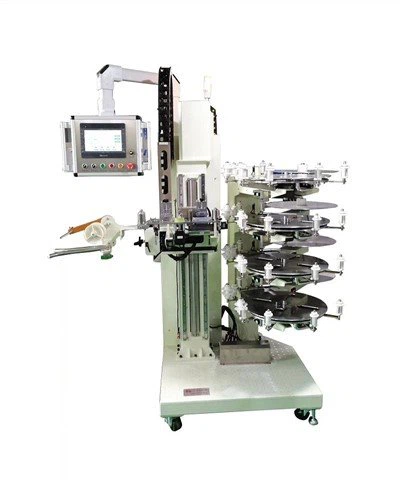
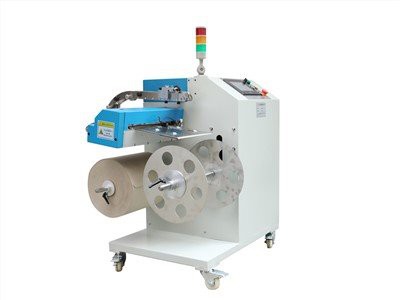
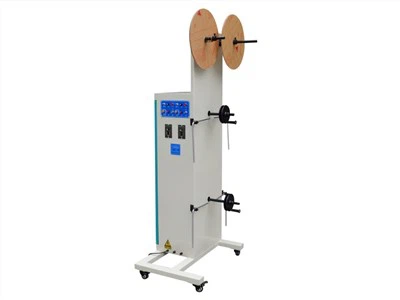
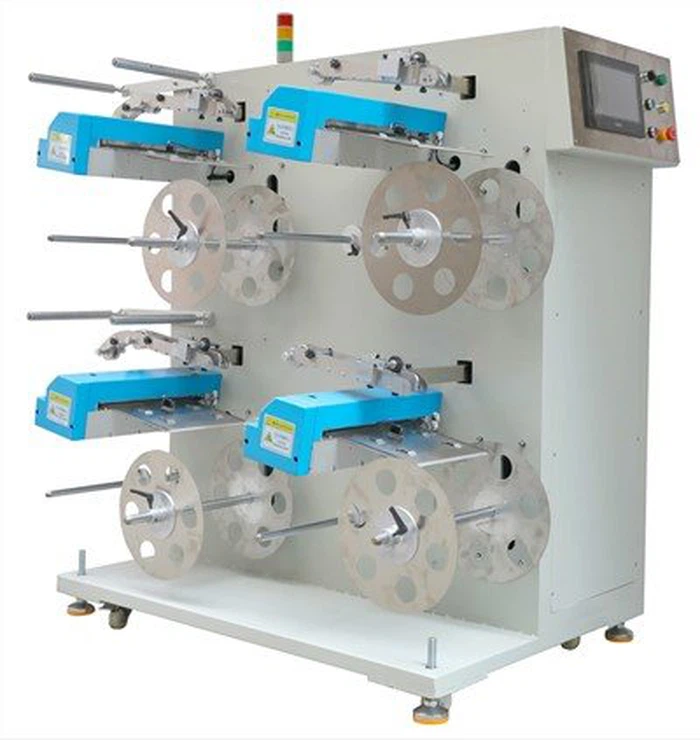
A winding machine wraps a material such as wire, yarn, or thread onto a spool, bobbin, or other forms. Winding machines are used in various industries, including textile manufacturing, cable and wire production, and coil winding for electrical equipment. There are several types of winding machines, each designed for specific applications.
Benefits of Winding Machine
Efficiency
The efficiency of production using winding machines is very high, and large-volume tasks can be completed quickly, which improves the production speed and benefits of the enterprise.
Diversification
The winding machine is very programmable, and can be processed and designed to different degrees according to different product requirements to produce diversified products.
Precision and accuracy
The winding machine has very high precision, and can very accurately wind the coil, winding quantity, etc., effectively ensuring the stability of product performance and quality. The winding machine can control the size and shape of the winding coil, making the size and performance of the product more stable and consistent.
Easy to operate
The winding machine has a friendly operating interface, is easy to operate and maintain, and employees can easily learn how to operate the winding machine correctly, improving production efficiency and production quality.






Why Choose Us
Experience
It has served more than 1,000 customers in more than 160 industries, and has practical experience in the research and development, design, production, manufacturing, sales, after-sales and other overall solutions of stamping automation equipment.
Production
The production workshop has advanced production and processing equipment such as CNC high-speed lathes, CNC machining centers, wire cutting, internal and external cylindrical grinders, lathes, milling machines, and boring machines; the R&D department introduces technologies from Japan and Taiwan.
Production equipment
Japan Okuma, Taiwan WELE, Italy Pama, imported grinder, CNC, wire cutting machine, drilling machine
Our team
With the joint efforts of the R&D team with more than 10 years of experience, continuous innovation has accumulated strong technical force.
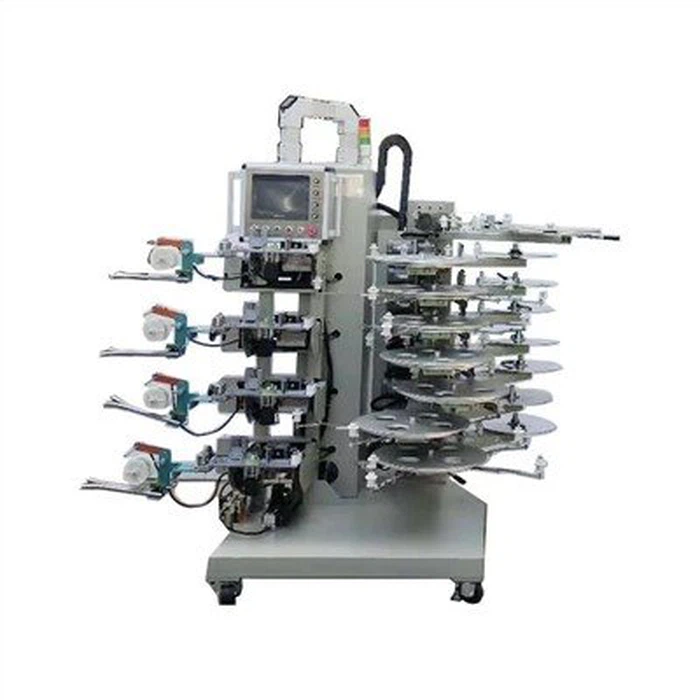
Winding machines typically consist of a rotating spindle or shaft that holds the core or spool onto which the material is wound. The material to be wound is usually fed through a guide mechanism that ensures uniform distribution across the spool. The spindle or shaft rotates, pulling the material onto the spool in a precise and controlled manner, with tension and speed being closely monitored to ensure quality winding. Depending on the type of winding machine, the spool may rotate, the material may be fed at a variable speed, or both. Some machines also have features such as automatic stop mechanisms or sensors to detect and alert the operator to any problems during the winding process. Overall, the winding machine operates with precision and consistency to ensure that the material is wound onto the spool in a uniform and efficient manner.
Winding Machine Features
As with many industrial machines, different types of winding machines come with various features. Here’s a look at some of the most popular and helpful winding machine features:
Web break detection
Many industrial winding machines include sensors that monitor the material being spooled. Many of these sensors work by sending a beam of light toward the material, and detecting whether the light is reflected back.
Automatic splice initiation
Automatic splicing features are used to create clean cuts with no overlap. In general, automatic splicing features are used to enhance productivity, control quality and reduce waste.
Roll changing
Roll-changing features allow users to set maximum diameters for spooling. Once that maximum diameter has been reached, the roll-changing feature swaps out the full spool for a new one.
Actuated knife cut-off
Actuated knife cut-off triggers a blade to cleanly cut the end of the material once a spool has reached its maximum diameter. Quality blades create clean, precise cuts.
How to Use a Wire Winding Machine
Prepare the machine: Before using the machine, make sure it is properly set up and the necessary components are installed. This may include setting up the winding head, installing the appropriate winding wire and core, and ensuring the tension and alignment of the machine is correct.
Set the machine parameters: Once the machine is prepared, set the parameters such as the number of turns, winding speed, wire gauge, and direction of the coil winding. The exact parameters will depend on the specific application and requirements.
Start the machine: Turn on the machine and begin the winding process. The machine will automatically wind the wire around the core according to the set parameters. Keep an eye on the machine to ensure it is operating smoothly and the wire is winding correctly.
Inspect and test the coil: Once the winding is complete, inspect the coil to ensure it meets the required specifications. Test the coil to ensure it functions properly and meets any performance requirements.
Remove the coil: Carefully remove the coil from the machine, taking care not to damage it. Trim any excess wire as needed.
How to Choose a Winding Machine
Weight of coil
The dimensions of the coil, together with its weight, need to be considered when choosing a winding machine. If the coil weighs more, the speed at which it rotates on the package will be reduced and vice versa. It is essential to have a machine that can hold the coil’s weight.
Wire diameter (0.01-4.5mm)
Wires have different diameters, and these affect the winding process. Larger wire diameters mean longer rotation times, thus reducing the winding speed and increasing production time.

Coil dimension
A winding machine must use a compatible coil for that specific machine i.e. if the machine is designed for a large coil dimension, the wire must also be of a large dimension. Therefore, you must also consider what coil dimension you require prior to purchase.
Coil winding method
When choosing a winding machine, the method used to wind the coils must also be considered, adjusted according to the desired rate of production. Coils can either wind at high speed with low torque or at a low speed with high torque.
Power supply problem
Check if the power supply of the bobbin winder is properly connected, make sure the power plug is not loose or damaged. Check if the power cord is broken or short-circuited, if so, the power cord needs to be replaced or repaired.
Motor problem
Check if the motor of the winding machine is working properly, you can judge it by observing whether the motor is rotating or making abnormal sound. If the motor does not rotate, it may be the motor itself is faulty, need to replace the motor or repair the motor. If the motor rotates but the speed is unstable, it may be the motor driver failure, need to check and repair the motor driver.
Control system problem
Check whether the control system of the winding machine is working properly, including the control panel and control circuit. Check whether the connecting wires of the control system are loose or damaged, make sure the signal transmission is normal. If the control system is faulty, it may be necessary to repair or replace the control panel, control circuit and other components.
Transmission system problems
Check whether the transmission system of the winding machine, including belts, gears and other components are working properly. Check if the connection of the transmission system is loose or damaged to make sure the transmission is working well. If the drive system is faulty, it may be necessary to replace or repair the drive components.
Other problems
Check that other parts of the winding machine, such as sensors, switches, etC., are working properly. Check the mechanical structure of the bobbin winder, such as bearings, slides, etC., for damage or need for lubrication. If none of the above methods can solve the problem, it is recommended to contact a maintenance professional for further troubleshooting and repair.
Types of Winding Machines
A traverse winding machine uses a reciprocating arm to move the material being wound back and forth across the width of the spool. This movement creates a crisscross pattern that helps to prevent tangling or knotting of the material during unwinding. Traverse winding machines are commonly used in textile manufacturing to wind thread onto spools for sewing and embroidery machines.
A precision winding machine is designed to wind materials with high accuracy and consistency. These machines are commonly used to produce cables, wires, and other electronic components. Precision winding machines can control the material's tension, speed, and winding pattern, resulting in a finished product with tight tolerances and minimal variation.
A drum winding machine is a machine that winds materials onto a cylindrical drum. These machines are commonly used in the production of fabrics, where the material is wound onto a large drum to create a continuous length of fabric. Drum winding machines can also wind wire or cable onto large spools for shipping or storage.
To create a coil, a coil winding machine is used to wind wire or other conductive material onto a core. Coils are used in various electrical and electronic devices, including motors, transformers, and solenoids. Coil winding machines can be either manual or automated, depending on the level of precision and speed required for the application.
A toroidal winding machine winds wire onto a toroidal core to create a toroidal coil. Toroidal coils are commonly used in high-frequency applications, such as power supplies and filters. Toroidal winding machines are typically automated and can wind multiple wires simultaneously to create a finished toroidal coil with high precision and consistency.
A rewinding machine is used to rewind a material wound onto a spool or reel. These machines are commonly used in the recycling industry to unwind materials such as paper or plastic and then rewind them onto a new spool or reel for reuse. Rewinding machines can also be used to salvage materials that have been damaged during the winding process.
A tension winding machine is a machine that controls the tension of the material being wound onto a spool. These machines are commonly used in producing fabrics and films, where precise tension control is required to ensure a high-quality finished product. Tension winding machines can also produce wire and cable to ensure consistent tension and prevent damage to the material during winding.
Application of Winding Machine
Electrical and electronics industry
Winding machines are extensively used in the electrical and electronics industry for manufacturing various types of coils used in transformers, inductors, solenoids, motors, generators, and other electromagnetic devices. These machines ensure precise winding of copper or aluminum wire onto bobbins or other types of cores to meet specific electrical requirements.
Automotive industry
Winding machines play a crucial role in the production of ignition coils, alternators, stators, and other components used in automobiles. These machines enable the precise and efficient winding of wires onto various types of cores or forms, ensuring the required electrical properties and reliability of the coils.
Aerospace and defense industry
In the aerospace and defense sectors, winding machines are used for manufacturing coils used in radar systems, communication systems, sensors, actuators, and other critical electronic components. These machines help achieve the precise winding of wire onto different core materials and shapes, meeting stringent performance and reliability requirements.
Medical industry
Winding machines are employed in the medical field for the production of coils used in medical imaging equipment such as MRI (Magnetic Resonance Imaging) machines. These machines ensure the accurate winding of wire onto specialized forms or cores, enabling the creation of coils with the desired electromagnetic properties.
Renewable energy industry
In the renewable energy sector, winding machines are used for manufacturing coils used in wind turbines, solar panels, and other renewable energy systems. These machines aid in the production of coils with specific electrical characteristics to optimize energy generation and efficiency.
Consumer electronics
Winding machines are used in the production of coils found in various consumer electronics devices, including smartphones, speakers, headphones, and electric appliances. These machines enable the high-volume production of coils that meet the requirements of size, electrical performance, and reliability.
Industrial automation and robotics
Winding machines are utilized in the manufacturing of coils used in industrial automation systems, robotic actuators, and servo motors. These machines ensure consistent and precise winding of wires onto cores or forms, contributing to the reliable operation of automated systems.
The winding machine is generally composed of several ingot boxes with the same structure. Each ingot boxes has three main functional parts: drum winding, wire guide transverse motion and tension control. The winding parts of the silk wire are mainly driven by the transmission mechanism to complete the winding of the silk wire by the rotation of the drum. The transverse motion parts of the wire guide are used to move the silk wire parallel to the side of the drum to and back to and forth to winding various specifications and shapes of the drum. The speed is determined by the set winding ratio following the spinning speed of the yarn. The tension control part mainly completes the real-time tension control in the winding process of the yarn.
How to Maintain the Winding Machine
Lubrication
Apply lubricants to moving parts, such as bearings, as recommended by the machine's manufacturer. Regular lubrication prevents friction-related problems and damage.
Machinery protection
Invest in dust covers or enclosures to protect your winding machine from environmental elements such as dust or moisture. This will minimize the need for frequent cleaning.
Proper storage
Store the winding machine in a clean, dry, and temperature-controlled environment to prevent corrosion and other potential damages.
Regular calibration
Ensure that the winding machine undergoes regular calibration checks to maintain accuracy and consistency in the winding process.
Disconnect Power: Before attempting any cleaning procedures, ensure that the machine is completely disconnected from the power source. This step is crucial for your safety.
Gather Necessary Tools: To clean the winding machine effectively, gather the following tools: a soft cloth, a small brush, a vacuum cleaner with a brush attachment, isopropyl alcohol, and compressed air.
Remove Exterior Dust: Begin by using a soft cloth to wipe away loose dust or debris from the exterior surfaces of the machine. Pay attention to crevices and hard-to-reach areas.
Vacuum Cleaning: Attach the brush to the nozzle of the vacuum cleaner and gently vacuum the interior components of the machine. Be cautious not to put excessive force on delicate parts.
Cleaning the Rollers: Winding rollers are the heart of the winding machine. To clean them, first, disconnect them from the power source and remove any film or dust particles using a soft cloth or brush. For thorough cleaning, dampen a cloth with isopropyl alcohol and gently wipe the rollers, ensuring they are dry before reassembly.
Cleaning the Mandrels: Mandrels, which support the coils during winding, can accumulate adhesive material over time. Using a soft brush, carefully remove any debris or residue. In case of stubborn residue, apply a small amount of isopropyl alcohol with the brush and scrub gently.
Cleaning the Tensioners: Winding machines often have tensioners to maintain the proper tension in the winding process. Clean the tensioners thoroughly using a soft cloth or brush, removing any accumulated dirt or debris.
FAQ
As one of the leading winding machine manufacturers in China, we warmly welcome you to buy high-grade winding machine made in China here from our factory. All our products are with high quality and competitive price.
Auto Coil Winding Machine, CCD Terminal Detection Rewinder, Automatic Layer Rewinder