

Servo Feeder
What is Servo Feeder
A servo feeder is a sophisticated device that precisely feeds material into a machine for stamping, cutting, or forming. Unlike traditional mechanical or pneumatic feeders, servo feeders have servo motors that provide exceptional control over speed, position, and acceleration. This advanced technology allows for unparalleled precision and efficiency, making servo feeders a vital component in the automation of manufacturing operations.
Benefits of Servo Feeder
Enhanced accuracy
One of the significant advantages of servo feeders is their exceptional accuracy in material feeding. These feeders utilize advanced servo motor technology, which enables precise control over the feeding process. The servo motor ensures consistent and repeatable movement, resulting in accurate placement and positioning of the material. This accuracy is crucial for achieving tight tolerances and reducing material waste in manufacturing operations.
Increased efficiency
Servo feeders are designed to optimize productivity and efficiency in material handling. They offer high-speed feeding capabilities, allowing for rapid and continuous feeding of materials. The precise control offered by servo motors enables faster feeding rates while maintaining accuracy. This increased speed and efficiency translate into higher production rates, shorter cycle times, and improved overall operational efficiency.
Versatility and flexibility
Servo feeders offer versatility and flexibility in handling various types of materials. They can handle a wide range of materials, including sheets, coils, strips, and more. The feeders can be easily adjusted to accommodate different material widths, lengths, and thicknesses, making them suitable for diverse applications.
Precise control
Servo feeders provide precise control over feeding parameters, allowing for easy adjustments to meet specific production needs. The feeding length, speed, acceleration, and deceleration can be precisely configured using the servo motor control. This level of control ensures consistent and accurate feeding, even when handling delicate or sensitive materials.
Error detection
Servo feeders often include advanced error detection and reporting features. They are equipped with sensors and monitoring systems that detect abnormalities, such as material jams, misfeeds, or feeding errors. When an error is detected, the feeder can automatically pause or notify the operator, allowing for quick intervention and minimizing production disruptions.



Why Choose Us
Experience
It has served more than 1,000 customers in more than 160 industries, and has practical experience in the research and development, design, production, manufacturing, sales, after-sales and other overall solutions of stamping automation equipment.
Production
The production workshop has advanced production and processing equipment such as CNC high-speed lathes, CNC machining centers, wire cutting, internal and external cylindrical grinders, lathes, milling machines, and boring machines; the R&D department introduces technologies from Japan and Taiwan.
Production equipment
Japan Okuma, Taiwan WELE, Italy Pama, imported grinder, CNC, wire cutting machine, drilling machine
Our team
With the joint efforts of the R&D team with more than 10 years of experience, continuous innovation has accumulated strong technical force.
Can a Servo Feeder be Seamlessly Integrated With an Automation System?
Servo feeders are designed to seamlessly integrate with automation systems, allowing for streamlined and synchronized operations. These feeders can be easily connected to other equipment, such as presses, stamping machines, or CNC machines, forming an integrated production line. The integration enables synchronized feeding and processing of materials, eliminating bottlenecks and optimizing overall system performance.

How do They Work?
The technology behind servo feeders centers around servo motors, which are key to achieving high precision and fine control of the feeding mechanism. These motors feature the ability to precisely manage motion variables such as position, velocity, and acceleration, thanks to built-in encoders that provide real-time feedback. This feedback loop allows for instant adjustments, ensuring exceptional accuracy.
What is the Reason for The Inaccurate Feeding of the Servo Feeder?
The sheet metal coil will always be biased in one direction because of the uneven feed roller pressure, which will cause inaccurate feeding. If the coil sheet always biased to the left, it means the pressure on the left is too large. At this time, turn the left pressure adjustment nut counterclockwise to reduce the left spring pressure until the material runs back to the correct position, or turn the right pressure adjustment nut clockwise to increase the right side spring pressure.

How to Adjust Servo Feeder for Different Materials
To ensure that the feeding height of the servo feeder is consistent with the mold line height of the mold, so that the material can enter the mold accurately. According to the actual height of the mold, determine whether the feeding height needs to be raised or lowered. Loosen the adjustment screws on the installation plate of the servo feeder. If the feeding height needs to be raised, rotate the adjustment screws clockwise to raise the machine table. If the feeding height needs to be lowered, rotate the adjustment screws counterclockwise to lower the machine table.
The correct pressure spring thickness adjustment is the key to ensure that the material does not slip. Refer to the pressure gauge on the side of the servo feeder. Use the pressure adjustment handwheel to adjust the pressure gauge indication to the position of 5.
According to the width of the material, the width of the material stop wheel needs to be adjusted to ensure that the material can smoothly enter the servo feeder. According to the width of the material, adjust the width of the material stop wheel to be about 2mm wider than the actual material feeding width.
According to the material type and stamping process requirements, the feeding angle and relaxation angle of the servo feeder need to be adjusted to ensure that the material can be fed and relaxed at the right time. These angles are usually adjusted according to the specific situation to meet the requirements of different workpieces.
What Are the Factors That Affect the Feeding Accuracy of the Servo Feeder?
The accuracy of the servo feeder itself
The backlash of the gears driving the feeding roller is relatively small, and the servo motor of the feeder can accelerate and decelerate flexibly and moderately.
Whether the feeding center line is level
The centerline of the servo feeder and the centerline of the press machine must be set at the same straight line. If it is not in a straight line, it is inclined to the mold when the uncoiled material is sent to the mold. As a result, great resistance will occur, reducing the accuracy of feeding to a large extent.
The amplitude accuracy of the coil
When the coil is slit from a full-size coil, due to the precision of the slitting machine, the amplitude of the slit material rigidity will have positive and negative errors. When the coil material passes through the guide pin of the mold, there will be a gap and jitter if the material is too narrow, which reduces the accuracy of feeding. On the other hand, if the material is too wide, the material will be compressed and deformed, seriously decreasing the feeding accuracy.
Waveform of the width of the material roll
The corrugated shape of the transverse width of the coil must be small. In the width direction, the swelling of the waveform in the length range of 2000mm must also be less than 2mm. The increase in thickness will also increase the bulge. In severe cases, there will be more than 5mm in the length range of 2000mm. Because of the bulging of the upper part, such materials cannot be fed.
Thickness accuracy in the width direction of the coil
The coils are all rolled from a wide-rolled steel plate. The accuracy near the center is better, and the two ends in the width direction appear gradually thinner. The accuracy of the thickness deteriorates. At this time, coils with relatively poor width accuracy will also affect the feeding accuracy.
The roughness of the material surface
Compared with coils with very smooth surfaces, the friction coefficient between the strip with a rough surface and the roller of the servo feeder would be higher. So it will reduce the feeding accuracy accordingly.
Choosing the Right Servo Feeder
Material or part size
Servo feeders are available in a range of sizes to accommodate different materials and part sizes. It is important to choose a feeder that can handle the size and weight of the material or part being fed.
01
Production speed
The speed of the production line will affect the feeding speed of the servo feeder. It is important to choose a feeder that can keep up with the production speed to avoid bottlenecks in the process.
02
Material or part type
Some servo feeders are designed for specific types of materials or parts, such as liquids, powders, or fragile parts. It is important to choose a feeder that is appropriate for the type of material or part being fed.
03
Control system
The control system is a critical component of the servo feeder, and it is important to choose a system that is reliable, easy to use, and can be customized to meet specific production requirements.
04
Safety features
Servo feeders should have safety features such as emergency stop buttons, guards, and sensors to prevent accidents and injuries in the workplace.
05
Application of Servo Feeder
Automotive industry
Servo feeders are used for feeding metal strips in the production of car parts such as body panels, chassis components, and other precision parts.
Electronics industry
They are employed in the manufacturing of electronic components, including circuit boards and metal enclosures, where high precision and speed are critical.
Metal industry
In metal stamping operations, servo feeders ensure accurate and consistent feeding of metal strips for the production of various stamped parts.
Appliance production
Servo feeders are used in the production of household appliances, handling the feeding of metal sheets for components like panels, frames, and structural parts.
Medical
They are used in the production of medical devices and equipment, where precise feeding of materials is essential to maintain tight tolerances and quality standards.
Aerospace industry
Servo feeders handle high-precision metal strips and sheets in the production of aircraft components, ensuring adherence to stringent industry standards and specifications.
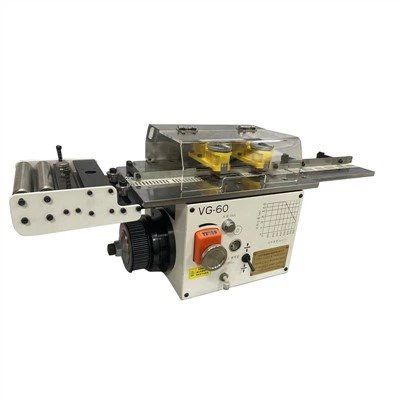
A servo feeder consists of three main components: a feeding unit, a control unit, and a servo motor. The feeding unit is responsible for delivering the material or part to the production line, while the control unit regulates the speed and timing of the feeding process. The servo motor provides the necessary torque and rotation to drive the feeding unit.
The feeding unit typically consists of a hopper, a feeding mechanism, and a sensor. The hopper is where the material or part is stored, and the feeding mechanism is responsible for delivering it to the production line. The sensor detects the presence of the material or part in the hopper and signals the control unit to start or stop the feeding process.
The control unit regulates the feeding process based on input from the sensor and other factors, such as the production speed and the type of material or part being fed. It uses a feedback loop to adjust the speed and timing of the feeding process to maintain a consistent flow of material or parts.
Maintenance Tips for Servo Feeder
Lubrication: Ensure all moving parts are properly lubricated according to the manufacturer's guidelines to reduce wear and prevent breakdowns.
Inspect and clean: Regularly inspect the feeder for dirt, debris, and signs of wear. Clean the equipment thoroughly to prevent buildup that can affect performance.
Check electrical connections: Periodically check all electrical connections for signs of corrosion or wear. Secure any loose connections to avoid electrical faults.
Calibrate sensors: Regularly calibrate the sensors and control systems to maintain accuracy in material feeding and prevent errors in the production process.
Replace worn parts: Proactively replace worn or damaged parts, such as belts and gears, to prevent unexpected downtime and maintain the feeder's efficiency.
FAQ
As one of the leading servo feeder manufacturers in China, we warmly welcome you to buy high-grade servo feeder made in China here from our factory. All our products are with high quality and competitive price.
Coil CNC Feeder