

Coil Feeder
What is Coil Feeder
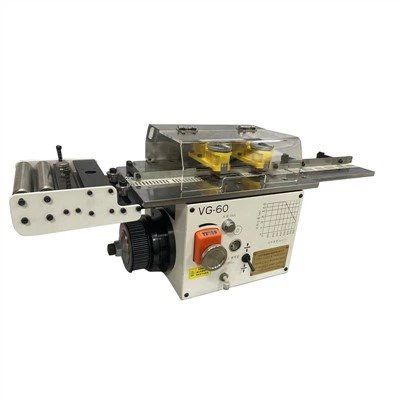
A coil feeder is a machine used in the manufacturing industry to feed coil material, such as metal or plastic, into a stamping or forming machine. The practical application of the feeder shows that a reasonable choice of AC servo system can meet the requirements of fast response time and high speed accuracy of the control system. Coil feeders are used in a variety of applications, including automotive, aerospace, electronics, and appliance manufacturing, where they help automate the feeding of material into production processes.
Benefits of Coil Feeder
Improved productivity
Coil feeders automate the process of feeding metal coils into machines, significantly reducing manual labor and increasing production speed. This leads to higher throughput and more consistent production rates.
Enhanced precision
Coil feeders ensure precise and consistent feeding of material, which improves the accuracy of subsequent processes such as stamping, cutting, or forming. This precision reduces material waste and enhances product quality.
Reduced material waste
Coil feeders minimize material waste by efficiently utilizing the entire coil and reducing the need for trim and scrap. Additionally, the automation of material feeding can lower labor costs and reduce the need for rework due to inaccuracies.
Versatility
Coil feeders can handle various material types, thicknesses, and widths, making them suitable for a wide range of applications. This versatility allows manufacturers to quickly switch between different production runs without significant downtime.





Why Choose Us
Experience
It has served more than 1,000 customers in more than 160 industries, and has practical experience in the research and development, design, production, manufacturing, sales, after-sales and other overall solutions of stamping automation equipment.
Production
The production workshop has advanced production and processing equipment such as CNC high-speed lathes, CNC machining centers, wire cutting, internal and external cylindrical grinders, lathes, milling machines, and boring machines; the R&D department introduces technologies from Japan and Taiwan.
Production equipment
Japan Okuma, Taiwan WELE, Italy Pama, imported grinder, CNC, wire cutting machine, drilling machine
Our team
With the joint efforts of the R&D team with more than 10 years of experience, continuous innovation has accumulated strong technical force.

1. The coil feeder has flexible layout of conveying route, wide adaptability, and can convey a variety of materials.
2. The coil feeder has fast conveying speed, long conveying distance, large conveying capacity and low energy consumption.
3. The coil feeder has a simple structure and light weight.
4. The coil feeder can convey continuously, work smoothly, and does not damage the conveyed materials; it is simple to operate, safe and reliable, easy to maintain and repair, and low maintenance and management costs.
The maximum roll size that a coil feeder can handle depends on the specific model.The coil feeder line supports high-tensile steel plates with stock widths up to 1,900 mm and stock thicknesses up to 6.0 mm. It also automates coil setting as well as midway cutting and rewinding of unwound stock. The weight capacity can vary significantly, with some feeders capable of handling rolls weighing up to several tons.


What Types of Materials can a Coil Feeder Handle?
A coil feeder can handle a wide variety of materials, including steel, aluminum, copper, brass, and other metals. It is also capable of processing non-metallic materials such as plastic and composite materials. The versatility of a coil feeder allows it to be used in various industries, accommodating different material thicknesses and widths, making it an essential component in manufacturing and production processes.
What Are the Main Components of a Coil Feeder?
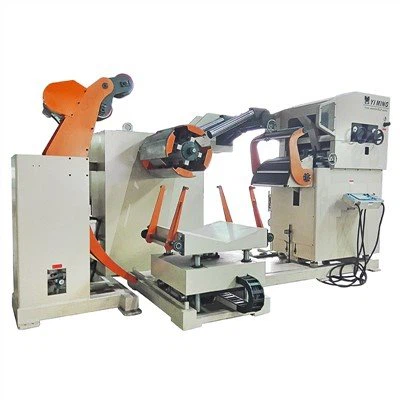
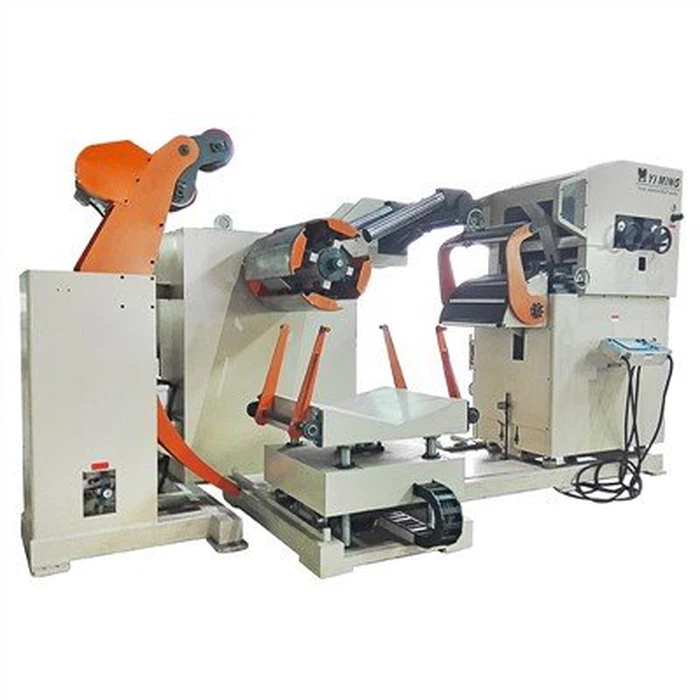
A coil feeder consists of several key components: an uncoiler or decoiler that holds and unwinds the coil, a straightener that flattens the material, and a feeder mechanism that accurately moves the material into the next stage of the production process. Additionally, it includes a control system to manage the feeding speed and synchronization with other machinery, and sometimes, a loop control or sensor system to ensure continuous and smooth material flow.
How to Control the Coil Tension of Coil Feeder
Coil tension control is another key element of coil feeder, which can ensure that the coil maintains constant tension during feeding, thus avoiding the phenomenon of unstable feeding caused by unstable tension. Coil tension control usually adopts technical means such as constant tension controller, tension adjustment system and tension sensor, which can adjust the tension size and pressure roller position to make the tension constant.
Factors to Consider When Choosing a Coil Feeder
Coil width and thickness
One of the primary considerations when choosing a coil feeders is the range of coil widths and thicknesses it can handle. The feeder should be able to accommodate the maximum and minimum dimensions of coils you intend to use in your production. Consider the materials you work with and ensure the feeder is capable of handling the required gauges without any compromise in performance.
Production speed and feed length
The production speed and feed length capability of the coil feeder are crucial factors to consider. The coil feeders speed should match or exceed your production requirements to prevent any bottlenecks in the process. Additionally, ensure that the feed length range is sufficient for your specific applications to avoid limitations when working with longer materials.
Material sensitivity
Some materials, particularly delicate or high-value ones, require gentle handling during the feeding process. Consider the sensitivity of your materials and look for a coil feeders that incorporates features such as servo-driven feed rolls or pneumatic pilot release to minimize any potential damage during feeding.
Feeding accuracy and precision
Precision is critical in metalworking applications, especially when working with tight tolerances. The coil feeder should offer high feeding accuracy to ensure consistent and reliable results. Look for features like precision servo controls, pilot release mechanisms, and digital displays to monitor and maintain feeding accuracy.
Integration and automation
Consider how well the coil feeder integrates with your existing production setup. Compatibility with your current machinery and control systems is essential to avoid any costly modifications or inefficiencies. Additionally, automation features can significantly enhance productivity by reducing manual intervention and streamlining the feeding process.
Safety features
Prioritize safety in your selection process by looking for coil feeder equipped with safety features. These may include safety guards, emergency stop buttons, and overload protection mechanisms to protect operators and prevent accidents during operation.
Types of Coil Feeder
Servo coil feeders
The servo coil feeder is a digital, mechanical and pneumatic integrated automation machine. It is a type of coil feeder. This feeder is suitable for the continuous production of rolled sheet material.
High-speed roller coil feeders
High speed roller coil feeder is the most widely used feeding equipment. The principle is that the feeder is connected to the output shaft of the press through a connecting rod and is driven by the press to operate. The advantages of high speed roller feeders are high feeding accuracy, high speed, no additional energy supply and very low failure rate.
Air coil feeders
The air coil feeder was one of the first feeding machines used in the stamping industry. The advantages of air feeders are ease of operation, ease of installation and affordability, enabling automated stamping feeding at the lowest possible price. In practice, it is mainly used for stamping products that do nor require high accuracy and speed in feeding.
Application of Coil Feeder
Automotive industry
The automotive sector relies heavily on coil feeders for the production of various components, such as body panels, brackets, and other parts made from sheet metal. The precision and speed of coil feeders make them indispensable in this industry.
Appliance manufacturing
Coil feeders are widely used in the production of home appliances, such as refrigerators, washing machines, and ovens. They enable manufacturers to process sheet metal efficiently, reducing production costs and ensuring high-quality products.
Metal fabrication
Metal fabrication shops utilize coil feeders to produce a range of products, from architectural components to custom metal parts. The versatility of coil feeders makes them a valuable asset in this industry.
Construction materials
Coil feeders are utilized in the production of construction materials like roofing sheets, metal studs, and structural beams, providing accurate material feeding for consistent product quality.
Aerospace industry
In aerospace manufacturing, coil feeders handle high-precision metal sheets and strips used in the production of aircraft components, ensuring adherence to stringent industry standards
After the test coil feeders is installed, first open the leveling roller and raise the folding arm.
Adjust the spacing of the guide rollers at the inlet of the coil feeder according to the material, and the spacing should be wider than the width of the passing material.
After the front section is completely adjusted, press down on the leveling head roller. Then switch the running mode of the spindle from manual running mode to automatic running mode.
When the material enters, press the leveling roller to the appropriate position, and adjust the distance between the guide rollers of the entrance width again, so that the width exactly matches the width of the material, so that the material can enter smoothly.
Finally, put down the material support arm of the material rack, press the forward rotation button of the main shaft to form the material ring, and then adjust the handwheel to the appropriate position.
Maintenance Tips for Coil Feeder
Keep the equipment clean and lubricated
One of the most basic maintenance tasks for a coil feeder is to keep the equipment clean and lubricated. Dirt, debris, and metal shavings can accumulate on the equipment over time, causing wear and tear on the moving parts. Cleaning the equipment on a regular basis can help prevent this build-up and ensure that the equipment continues to operate smoothly. Additionally, lubricating the moving parts of the coil feeder can reduce friction and wear.
Check the feed line for wear and damage
Over time, the coil feeder can experience wear and damage, which can affect its performance. Regular inspections can help identify these issues before they cause significant problems. It is recommended to check the feeder for wear and damage after every shift, or at least once a day.
Maintain proper tension
Proper tension is critical for the successful operation of the coil feeder. If the tension is too loose, the coil may slip or feed inconsistently, leading to quality issues and downtime. If the tension is too tight, the coil may stretch or break, again causing quality issues and downtime.
Check and adjust the straightener
The straightener is a critical component of the coil feeder, as it ensures that the material being fed is flat and straight. Regular inspections can help identify issues with the straightener and allow for adjustments to be made before they become significant problems.
Maintain proper alignment
Proper alignment is critical for the successful operation of the coil feeder. Misalignment can cause the material to feed inconsistently, leading to quality issues and downtime. Regular inspections can help identify alignment issues and allow for adjustments to be made before they become significant problems.
FAQ
As one of the leading coil feeder manufacturers in China, we warmly welcome you to buy high-grade coil feeder made in China here from our factory. All our products are with high quality and competitive price.
Paper Feeding Winding Machine, Automatic Rewinding Machine, Compact Servo Feed Line